logo
  • Home
  • Investor Insight
  • Market Moves
  • Global Economy
  • Finance Radar
  • Money Matters
  • Trade&Trends
logo
search
search
Category:

Global Economy

  • Global Economic Outlook 2025
    Global Economy

    Global Economic Outlook 2025

    2025-12-14

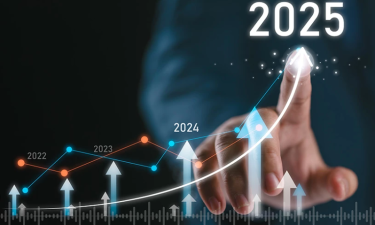
    In 2025, renewed global tariff frictions, heightened geopolitical tensions, trade policy uncertainty, and high financial market volatility will all put pressure on the global economy. While global trade continues to grow, the global economy has demonstrated fragile resilience. New policy measures have reshaped the current environment, and the global economy is adjusting accordingly. Some extreme scenarios of tariff increases have been mitigated as relevant parties subsequently reached agreements and reset arrangements. However, the overall environment remains volatile, and temporary factors supporting economic activity in the first half of 2025, such as front-load effects, are fading. The risks to the economic outlook are skewed to the downside. Persistent uncertainty, increased protectionism, and labor supply shocks could dampen economic growth. Fiscal vulnerabilities, potential adjustments in financial markets, and institutional erosion could threaten stability. We urge policymakers to restore confidence through credible, transparent, and sustainable policies. Trade diplomacy should be combined with macroeconomic adjustments. Fiscal buffers should be rebuilt. Structural reforms should be intensified. As shown in Chapter 2, past actions taken by countries to improve policy frameworks have yielded positive results. As shown in Chapter 3, industrial policy can play a role, but countries should fully consider the opportunity costs and trade-offs involved in adopting it.
  • Are Emerging Markets Gaining Momentum?
    Global Economy

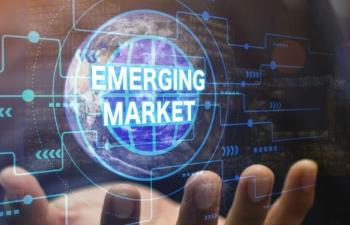
    Are Emerging Markets Gaining Momentum?

    2025-12-14

    Emerging markets are markets with gradually improving market economies, relatively high economic growth rates, and significant market potential. A 1994 research report by the U.S. Department of Commerce listed the China Economic Zone, India, ASEAN countries, South Korea, Turkey, Mexico, Brazil, Argentina, Poland, and South Africa as major emerging markets. By 2025, emerging market central banks had cumulatively cut interest rates 51 times, totaling 3085 basis points, marking the largest easing measure since at least 2021; the scale of the rate cuts far exceeded the 2160 basis points cut in 2024. Inflation levels were effectively controlled. Analysts predict that there is room for further easing policies, with countries like Brazil and Hungary potentially initiating rate cuts. Emerging markets refer to stock or energy markets in developing countries. According to the authoritative definition of the International Finance Corporation, a country or region is considered an emerging market if its per capita Gross National Product (GNP) has not reached the level defined by the World Bank as a high-income country. Some countries, despite having reached high-income status in terms of economic development and per capita GNP, are still considered emerging markets due to their lagging stock market development and immature market mechanisms. Compared to traditional industries, the internet is a truly emerging market.

  • Where Is Global Growth Coming From Now?
    Global Economy

    Where Is Global Growth Coming From Now?

    2025-12-08

    Global economic growth is primarily driven by structural transformation in emerging markets, technological revolutions, the advancement of green energy and sustainable development, the restructuring of global supply chains, and the recovery of the service sector in developed economies. These factors combined to propel sustained global GDP growth. By 2025, global economic growth is projected to be led by Asia, driven by technology, and characterized by green transformation. Emerging markets will contribute 60% of global growth, AI and semiconductors will reshape industry value chains, and green investment will create new growth poles.

  • Is the Global Economy More Fragile Than It Looks?
    Global Economy

    Is the Global Economy More Fragile Than It Looks?

    2025-12-07

    In 2025, escalating global tariff frictions, heightened geopolitical tensions, trade policy uncertainty, and high financial market volatility will all put pressure on the global economy. While global trade continues to grow, the global economy exhibits fragile resilience. Although data does not indicate a deep recession, the combined effects of weak global demand, sluggish private investment, a manufacturing cycle downturn, and the transmission of low growth from developed economies to the global economy are pushing global growth from a weak state to a lower downward trajectory. New trade policy barriers are being implemented gradually, and political uncertainty and declining investment are hindering economic growth, but demand has surprisingly remained strong. The report attributes this strong demand to loose global financial conditions, supportive macroeconomic policies, and new investments in artificial intelligence.

  • Global Growth in an Uncertain Era
    Global Economy

    Global Growth in an Uncertain Era

    2025-12-07

    The global economy is undergoing a period of highly uncertain transformation, facing the dual challenges of short-term disruptions and long-term structural adjustments. At the regional level, economic performance is significantly diverging: the US outlook is bleak with persistent inflationary pressures; Europe, while experiencing fragile growth, is showing signs of improvement; while emerging regions such as sub-Saharan Africa and the Middle East and North Africa are demonstrating stronger development momentum. The report also provides an in-depth analysis of the long-term restructuring of the global order, identifying trade reshaping, fiscal imbalances, and AI-driven technological change as the three major systemic forces reshaping the global order. Global economic growth is expected to slow significantly from 2025 to 2027. Baseline forecasts indicate that the global economic growth rate will fall from the previously expected 2.8% to 2.5%, with global output growth projected at only 2.3% in 2025 and 2026, before slightly recovering to 2.9% in 2027. This is a consequence of the ripple effects of US tariff policies, geopolitical risks, and broader economic policy uncertainties.

  • The Logic Behind Long-Term Economic Change
    Global Economy

    The Logic Behind Long-Term Economic Change

    2025-12-06

    The underlying logic of long-term global economic changes is undergoing profound restructuring, shifting from the traditional theme of "peace and development" to a new paradigm centered on "security and development." This transformation is driven by multiple factors and has a far-reaching impact on the global economic landscape. In today's rapidly changing global economic landscape, the financial sector is evolving at an unprecedented pace. From international trade relations to monetary policy and the rise of emerging industries, every variable is shaping market trends. For investors, understanding the logic behind these changes is not only a means of risk avoidance but also a key to seizing opportunities. International trade has always been an important component of the globalized economy. Cross-border exchange of goods and services has further fueled rapid development over the past century.

  • Is Global Growth Becoming More Uneven?
    Global Economy

    Is Global Growth Becoming More Uneven?

    2025-12-05

    Economic growth over the past 150 years can be broadly divided into three phases: the golden age at the end of the 19th century, the dark period during the two World Wars, and the economic recovery at the end of the 20th century. In the process of globalization, economic convergence—the phenomenon of poor countries catching up with rich countries at an accelerated pace—is closely and positively correlated with globalization. This indicates that globalization not only promotes economic growth but also helps narrow the gap between rich and poor countries. However, globalization has exacerbated inequality within many resource-rich but labor-scarce countries. Typical examples include Argentina, Australia, Canada, and the United States, where their natural resources have been more extensively developed and exported, but their domestic workforce has not benefited accordingly. From a macro perspective, economic globalization has indeed promoted global economic growth. However, from a local perspective, globalization has exacerbated inequality within countries. A significant aspect is the widening gap between rich and poor, meaning that income is not distributed equally. This article will illustrate the characteristics of the impact of economic globalization on income inequality by providing examples of typical developed and developing countries.

  • What Drives Growth in the New Global Order?
    Global Economy

    What Drives Growth in the New Global Order?

    2025-12-04

    Currently, the world is undergoing profound changes unseen in a century, with significant transformations in the world order manifested in an imbalance of international power, dysfunction of global governance mechanisms, and a crisis of international values. Against this backdrop, building a new world order that reflects the current power structure, ensures orderly international operations, and embodies shared values is an inevitable trend. The construction of this new world order cannot be separated from the guarantee of governance capacity; major powers need to play a more active, proactive, and constructive role, effectively improving their ability to build consensus, construct mechanisms, and guide values. The transformation and adjustment of the world order has triggered fierce competition among major powers, driving the differentiation and recombination of various forces, further highlighting the instability and uncertainty of the international community. How to build a more just, reasonable, and effective world order within the historical trend of peace, development, cooperation, and win-win outcomes has become a common demand of the international community. Global economic growth, this massive ship, is forging ahead through turbulent waters. Its power comes from multiple powerful engines, their coordinated work propelling the world economy forward. However, will its future course change? This is a question worthy of our deep consideration.

  • The New Playbook for Economic Growth
    Global Economy

    The New Playbook for Economic Growth

    2025-12-03

    The global economy is quietly undergoing a profound transformation, seemingly caught in a "boiling frog" scenario. While the International Monetary Fund (IMF) predicts a 3% global GDP growth rate for 2025, which appears optimistic on the surface, a closer look reveals that a staggering 72% of chief economists foresee further economic weakness in the coming year. Geopolitical frictions, the impact of artificial intelligence, and the restructuring of supply chains are collectively propelling the world towards an era of unprecedented differentiation. In this era, widespread prosperity is a thing of the past, replaced by structural development opportunities. The global economy in 2025 is not simply divided into "good" and "bad," but rather exhibits a coexistence of "resilience" and "fragility." A complex and volatile international landscape, coupled with a multitude of global challenges, tests the responses and choices of nations. For the global economy to maintain robust growth, strengthened international cooperation remains crucial. Only through enhanced international policy coordination and improved global governance structures can we collectively address global challenges and achieve more balanced and sustainable development.

  • What the Global Economy Means for Everyday Life
    Global Economy

    What the Global Economy Means for Everyday Life

    2025-12-01

    The global economy has multifaceted impacts on daily life, profoundly altering lifestyles through channels such as the flow of goods, cultural exchange, employment opportunities, and technological advancements. Key benefits of economic growth to society include improved living standards, poverty reduction, provision of public services, promotion of technological progress, environmental sustainability, social stability, international influence, investment and capital accumulation, addressing population growth, and enhancing government fiscal capacity. Economic growth is not merely a quantitative increase but also requires qualitative improvement, focusing on productivity, innovation, resource efficiency, and social inclusion. Sustained and inclusive growth contributes to building a more prosperous, equitable, and sustainable society. Economic globalization is a process that transcends national borders, involving trade, capital flows, technology transfer, service provision, and global interdependence and connections. This process facilitates the transnational flow of goods, technology, information, services, currencies, and people; in short, it tightly connects the world economy into a unified whole. Economic globalization is not only a key characteristic of the contemporary world economy but also a significant trend in global economic development.

  • Understanding Global Economic Realignment
    Global Economy

    Understanding Global Economic Realignment

    2025-12-01

    The reshaping and adjustment of the global economic system has always been a hot topic. With the deepening of globalization and changes in the international situation, we face many challenges and opportunities. The global economic landscape is quietly changing, and the volatile international political situation not only brings headlines but also affects everyone's finances. When policy winds shift, how should ordinary people respond? Should they follow the crowd or take the initiative? Changes in the international situation often first manifest in the foreign trade sector. As some countries adjust their policies, the global supply chain is being restructured, bringing both challenges and opportunities. The tide of time surges forward, waiting for no one. But as long as we maintain a learning mindset and broaden our understanding, we can grasp the unchanging essence amidst change and find a way to survive in turmoil.

  • Global Economy at a Turning Point
    Global Economy

    Global Economy at a Turning Point

    2025-11-30

    2025 has already witnessed significant global changes, including heightened geopolitical instability, the accelerating impact of artificial intelligence, and ongoing shifts in the labor market. Economic factors such as new US tariffs are reshaping the trade landscape. Meanwhile, while progress has been made in the energy transition, gender disparities persist. With divergent policies and economic performances around the world, and shifting geopolitical situations, the global economy is at a turning point. Recent forum studies, through expert interviews, have explored in depth the key factors influencing contemporary society. These factors include the divergence in economic and political landscape, the rapid transformation brought about by artificial intelligence, and the demands of fairness and sustainable development.

  • Capital Flows in a Changing World Order
    Global Economy

    Capital Flows in a Changing World Order

    2025-11-28

    The restructuring of the global order is profoundly reshaping the underlying logic of cross-border capital flows, prompting a shift from efficiency-first to security-first, and from centralized to regionalized clusters. International capital flows are on the rise, exhibiting characteristics such as short-term nature, financialization, and multi-center distribution. The reshaping of the global economic landscape, the severe divergence in recovery prospects, and the accelerated adjustment of the policy and regulatory environment have spurred large-scale and rapid global capital flows. Since the latter half of the 1980s, international direct investment has surged, and the size of international capital markets has grown rapidly. Since the outbreak of the pandemic, the total scale of international capital flows has increased, direct investment has shrunk by 42%, and securities investment liquidity has increased. The impact of international capital flows on capital-exporting countries, capital-importing countries, and the international economic situation varies.

  • How Geopolitics Is Reshaping the Economy
    Global Economy

    How Geopolitics Is Reshaping the Economy

    2025-11-27

    Geopolitics is profoundly reshaping the global economic landscape through multiple mechanisms, primarily manifested in supply chain restructuring, intensified technological competition, diversified monetary systems, and the formation of new models of regional economic cooperation. Under the wave of globalization, the global supply chain, once a tightly intertwined link between national economies, built a complex and vast network of production, transportation, and sales, driven by the pursuit of efficiency and cost optimization. However, in recent years, frequent geopolitical conflicts have acted like a powerful undercurrent, violently impacting the original supply chain structure and driving its profound reshaping. The direct impact of geopolitical conflicts on the global supply chain is reflected in logistical disruptions and a surge in trade barriers.

  • Global Risks, Local Impact
    Global Economy

    Global Risks, Local Impact

    2025-11-22

    The global landscape is increasingly fragmented, with escalating geopolitical, environmental, social, and technological challenges threatening stability and progress. While the importance of economic risks has diminished somewhat in this year's survey results, those closely linked to social and geopolitical tensions remain a cause for concern. Armed conflict between states is identified as the most pressing immediate global risk in 2025, with nearly a quarter of respondents considering it their most serious concern for the coming year. Global risks in 2025 will be complex and intertwined, primarily manifested in weak economic recovery, geopolitical tensions, and global governance dysfunction. The impact of these risks will vary significantly across different regions and sectors, with some potentially facing more direct shocks.

Popular Posts

  • What Trade Data Reveals About the Global Economy

    What Trade Data Reveals About the Global Economy

  • How Geopolitics Is Changing Trade Flows

    How Geopolitics Is Changing Trade Flows

  • How Geopolitics Is Reshaping the Economy

    How Geopolitics Is Reshaping the Economy

  • Tracking Goods and Capital Across Borders

    Tracking Goods and Capital Across Borders

  • Financial Indicators That Matter Before Trends

    Financial Indicators That Matter Before Trends

About Us

Privacy Policy

Term Of Use

Copyright © 2025 Sound Finance. All rights reserved.

logo
  • Home
  • Investor Insight
  • Market Moves
  • Global Economy
  • Finance Radar
  • Money Matters
  • Trade&Trends
  • About Us
  • Privacy Policy
  • Term Of Use